
Mulching in Petaluma, CA
Fresh mulch keeps garden beds looking finished, holds moisture through Sonoma County's dry summers, and helps keep weeds down — a simple job that makes a real difference in how a yard looks and how much water it needs.
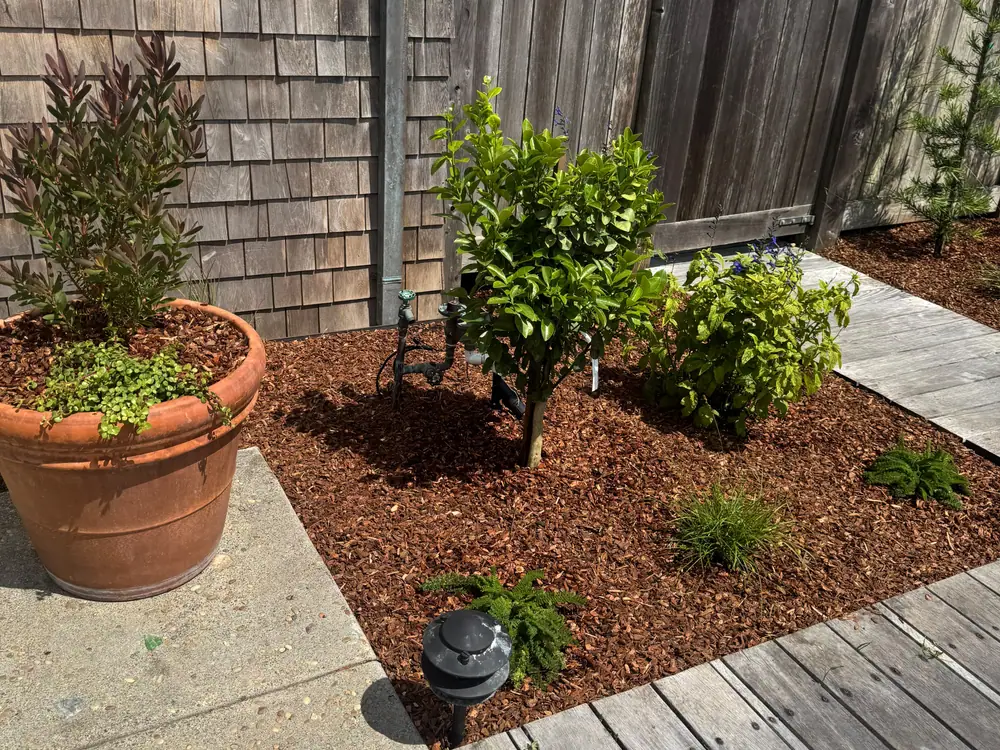
Signs Your Beds Need Fresh Mulch
- Existing mulch has faded, thinned out, or broken down to soil
- Weeds are coming up more than they used to in the same beds
- Garden beds look bare or inconsistent after a planting project
- Soil dries out quickly between waterings during summer
How We Mulch a Bed
1. Clear the bed
Old, broken-down mulch and weeds are cleared before new material goes down.
2. Edge the bed
A clean edge between bed and lawn or hardscape is cut or reset.
3. Spread mulch
Mulch is spread to a consistent depth (typically 2-3 inches), kept clear of plant stems and trunks.
Frequently Asked Questions
How often does mulch need to be refreshed?
Most organic mulch breaks down and needs topping off roughly once a year, though it depends on the mulch type and how much sun and rain a bed gets — beds in full summer sun break mulch down faster than shaded areas.
Does mulch actually help in Petaluma's dry summers?
Yes — a layer of mulch slows moisture loss from the soil, which matters during Sonoma County's dry, rainless summers, and it also keeps soil temperature more even around plant roots.
What type of mulch do you use?
It depends on the bed and the look you want — bark and wood-chip mulches are the most common for ornamental beds. We'll talk through options when we scope the job rather than default to one type for every yard.
Can mulching help with weeds?
A properly applied mulch layer (typically 2-3 inches) suppresses a lot of weed germination by blocking light, though it won't stop established, deep-rooted weeds on its own — those need to be pulled first.
Ready to refresh your beds?
Call for a free estimate on mulching your Petaluma-area property.