
Retaining Wall Installation in Petaluma, CA
Petaluma's hillside lots need retaining walls that do more than look good — they have to hold back clay soil that expands and contracts with the seasons and move water away from the wall instead of trapping it. We build wood, block, and stone retaining walls sized for the slope and the soil, not just the square footage.
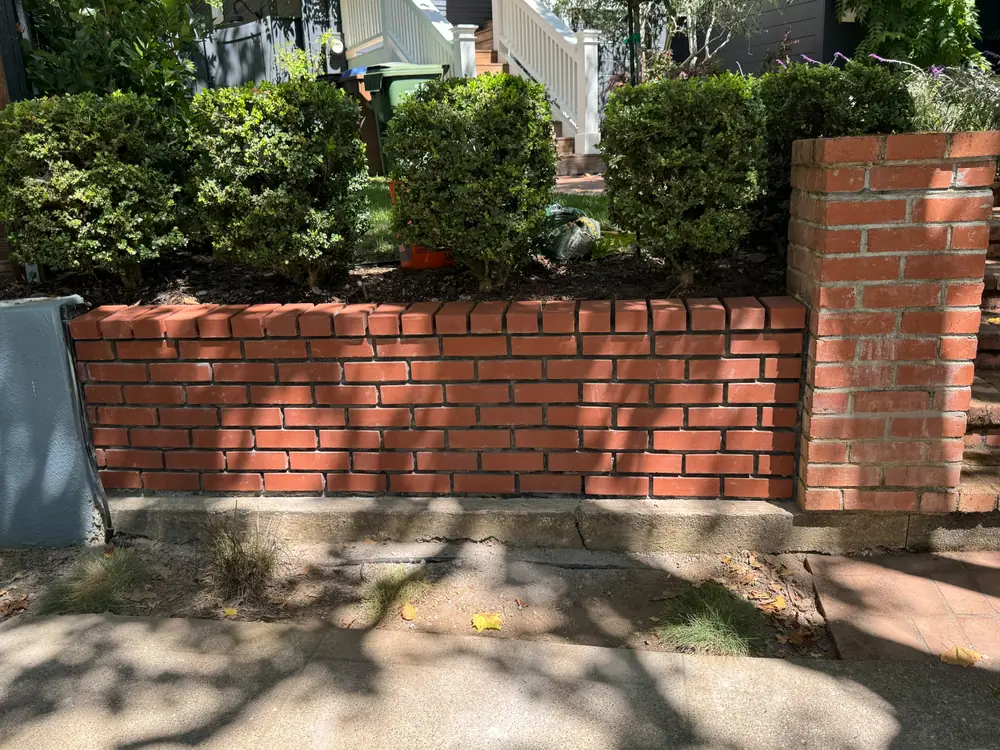
Signs Your Property Needs a Retaining Wall
- A slope is eroding or losing soil after every winter rain
- An existing wall is leaning, bulging, or has visible cracks
- Water pools against your house foundation on sloped ground
- You want a flat, usable section of yard cut into a hillside lot
- A fence or deck project needs a level base cut into a slope first
How We Build a Retaining Wall
1. Site & soil assessment
We check slope, soil type, and what's uphill — a wall holding back a driveway is engineered differently than one holding back a garden bed.
2. Excavation & footing
The footing is dug and sized to the wall height and the load behind it, on compacted base.
3. Drainage & backfill
Perforated drain pipe and gravel backfill go in behind the wall before it's ever visible — this is the step that determines whether the wall lasts.
4. Wall construction
Wood, block, or stone goes in course by course, checked for level and batter (the slight backward lean that adds structural stability).
5. Grading & cleanup
Finish grading directs surface water away from the wall, and the site is cleaned up before we walk it with you.
What Affects Retaining Wall Pricing
Wall height & length
Taller walls need more excavation, more material, and often engineering — cost scales with both height and linear footage.
Material
Wood is typically the most affordable, segmental block sits in the middle, and natural stone costs the most.
Site access
A backyard slope with no equipment access takes longer and costs more than a wall built along a driveway.
Drainage complexity
A wall on a wet slope or catching runoff from a large uphill area needs more drainage work than a short garden wall on flat ground.
Retaining Walls Across the North Bay
Based in Petaluma, we build retaining walls throughout Sonoma and Marin counties, including Santa Rosa, Rohnert Park, and Novato — hillside lots and clay soil are common across all of them, and the same drainage-first approach applies wherever the job is.
Frequently Asked Questions
How tall can a retaining wall be before I need a permit?
In most of Sonoma County, walls over roughly 3-4 feet (measured from the bottom of the footing) typically require a permit and often an engineered design, but the exact threshold depends on the wall's location, what's above it, and surcharge from a slope or structure. We check this against your specific site rather than assume — get it wrong and the wall has to come back out.
What's the difference between a wood, block, and stone retaining wall?
Wood (typically pressure-treated timber) is the most affordable and common choice for shorter garden and slope walls; segmental block is more durable long-term and handles taller walls better; natural stone costs more but fits a more finished, high-end look. The right material depends on wall height, budget, and whether it's structural or more decorative.
Why does my retaining wall need drainage behind it?
Without a drain line and gravel backfill behind the wall, water builds up in the soil during Sonoma County's wet winters and pushes against the wall from behind — that hydrostatic pressure is the single biggest cause of retaining wall failure. Every wall we build includes drainage sized to the site, not just the visible face.
Can you replace a failing or leaning retaining wall?
Yes — a leaning, bulging, or cracked wall usually means the original drainage or footing wasn't sized correctly, and it needs to come out and be rebuilt rather than patched. We'll assess whether a repair is realistic or whether the wall needs full replacement.
How long does a typical retaining wall take to build?
A shorter garden wall can be a few days; a taller engineered wall with drainage, footings, and backfill on a hillside lot can run one to two weeks depending on access, soil conditions, and whether excavation hits anything unexpected. We give a realistic timeline after walking the site, not a generic estimate.
Have a slope that needs holding back?
Call for a free estimate on your Petaluma-area retaining wall project.