
Patio Installation in Petaluma, CA
Flagstone and paver patios are the single most common project we build — set on a base that's graded and prepped for North Bay clay soil so the patio doesn't heave, crack, or pond water after the first wet winter.
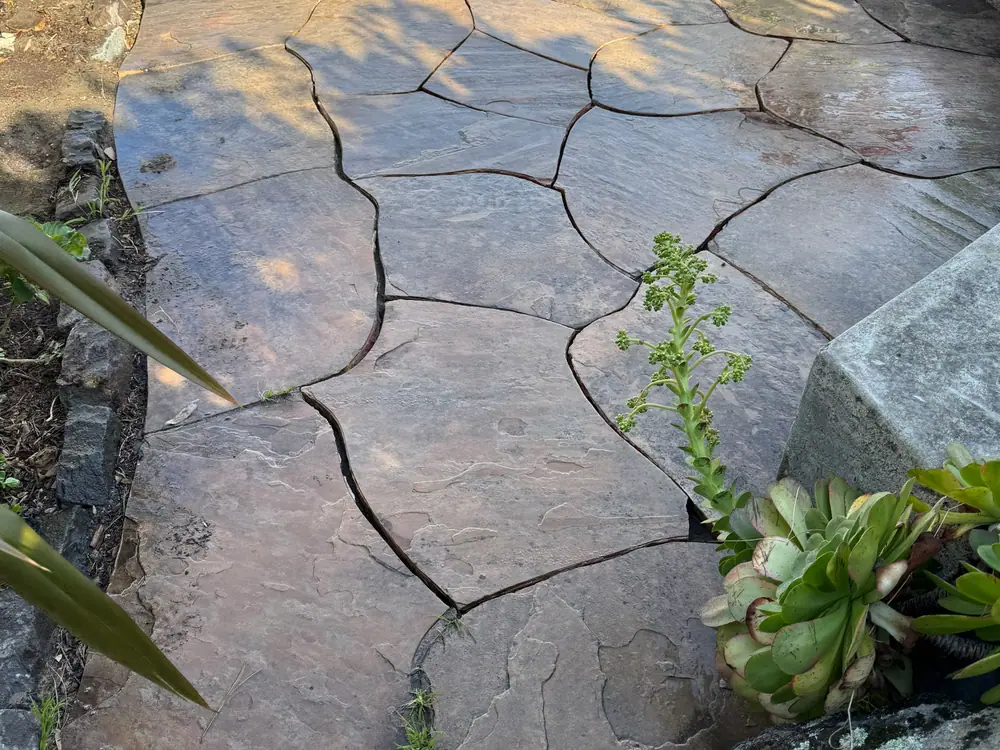
Signs You're Ready for a New Patio
- An old concrete slab is cracked, uneven, or dated
- You want a dedicated outdoor living or dining space
- Bare dirt or gravel next to the house floods or tracks mud inside
- You're planning a broader backyard renovation and want the patio to anchor it
How We Build a Patio
1. Layout & excavation
The patio footprint is marked and excavated to depth for the base material and stone thickness.
2. Base & grading
Compacted gravel base is graded with a slope away from the house before any stone goes down.
3. Setting the stone
Flagstone or pavers are set and leveled, with joints sized and filled for proper drainage.
4. Joints & edging
Sand or polymeric joint fill and edge restraints lock the patio in place and keep it from shifting.
What Affects Patio Pricing
Square footage
Larger patios need more base material and more stone, scaling cost directly.
Material
Flagstone generally costs more than standard pavers; premium paver patterns and colors add cost too.
Site prep
Removing an old slab, dealing with tree roots, or correcting drainage first all add to the job.
Shape & detail
Curved edges, seat walls, and multi-level patios take more layout and labor than a simple rectangle.
Patios Across the North Bay
We build patios throughout Petaluma and neighboring Santa Rosa,Novato, and Sonoma.
Frequently Asked Questions
What's the difference between a flagstone and a paver patio?
Flagstone is natural, irregularly shaped stone set with mortared or gravel joints, giving a more organic, high-end look; pavers are uniform manufactured units (concrete or clay) that install faster and cost less per square foot. Both hold up well in Sonoma County's climate — the choice usually comes down to budget and the look you're after.
Do you set patio stone in mortar or on a gravel base?
Most residential patios here go on a compacted gravel/sand base with sand-swept or polymeric-sand joints, which lets the patio flex slightly with our clay soil instead of cracking. A fully mortared patio is more rigid and can be the right call in some situations, but it's less forgiving of soil movement — we'll recommend the right base for your specific site.
How do you keep a patio from flooding or holding water?
The base is graded with a slight slope (typically about 1-2%) away from the house before any stone goes down, and joints are sized to let water drain through rather than pond on the surface — this matters more here than in drier climates because of how much rain the North Bay gets in winter.
Can you build a patio around an existing tree or garden bed?
Yes — working the layout around an existing tree's root zone or a garden bed you want to keep is a normal part of patio design, not a special request. We'll flag if a tree's roots make a section of the site risky to excavate.
How long does patio installation take?
A small-to-mid-size patio typically takes a few days to about a week, depending on size, base prep, and whether drainage work is needed first. Larger patios or ones tied into a broader hardscape project take longer.
Ready to build a patio?
Call for a free estimate on your Petaluma-area patio project.